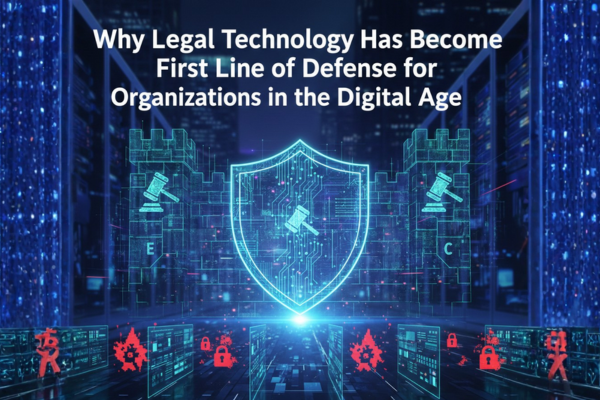
Organizations today are moving toward digital transformation faster than ever before. And it’s not just the financial or tech sectors leading this shift—the legal field itself is undergoing a major digital revolution.
In this rapidly evolving world, Legal Technology (LegalTech) has emerged as one of the most critical tools organizations rely on to protect operations, control compliance, and manage risks.
So what makes LegalTech the first line of defense for any organization operating in a digital environment?
1. Identifying Risks Before They Happen
Legal risks are no longer discovered after the damage is done.
Modern LegalTech solutions allow organizations to:
-
Detect weaknesses in contracts
-
Track legal obligations
-
Analyze potential risks in processes
-
Compare documents with current regulations
Errors no longer wait for a lawyer to notice them—technology spots them instantly.
2. Compliance Becomes Automated, Not a Burden
With the rise of digital regulations—such as data protection, privacy laws, e-contracts, and cybersecurity requirements—organizations struggle to keep up.
LegalTech steps in by enabling companies to:
-
Continuously monitor compliance
-
Generate ready-to-submit regulatory reports
-
Automatically document every step
-
Avoid costly fines and violations
Compliance becomes an automatic workflow, not a stressful challenge.
3. Contract Management Without Chaos
Contracts are the heartbeat of any organization, yet traditional contract management is full of risk:
-
Forgotten renewals
-
Lost versions
-
Human errors
-
Inconsistent formatting
Smart Contract Management Systems bring order by making every contract centralized, trackable, and monitored in real time.
4. Proper Documentation… and Instant Access to Anything You Need
LegalTech provides a “digital institutional memory” that protects the organization from:
-
Lost documents
-
Missing evidence
-
Paper clutter
-
Staff turnover
Smart archiving ensures that every document is one search away—not buried in folders for hours.
5. Strategic Decision-Making Powered by Accurate Data
Legal decisions are no longer based solely on experience or intuition.
Legal data analytics helps organizations:
-
Identify weaknesses
-
Measure compliance across departments
-
Evaluate legal team performance
-
Predict outcomes based on historical data
For senior management, this means more confident and informed decisions.
6. Protecting Reputation Before a Crisis Starts
Most corporate crises have legal roots—data breaches, policy violations, contract issues, or disputes.
LegalTech helps organizations:
-
Detect early signs of trouble
-
Manage risks in real time
-
Build a stable and legally safe environment
This shifts the organization from reacting to crises to preventing them.
Conclusion
Legal Technology is no longer just a tool for lawyers; it has become a comprehensive shield that protects organizations, supports leadership decisions, and creates long-term legal stability.
In an era where laws evolve rapidly and data continues to grow, LegalTech has become the essential risk-prevention system for any company aiming to grow confidently in a complex digital world.